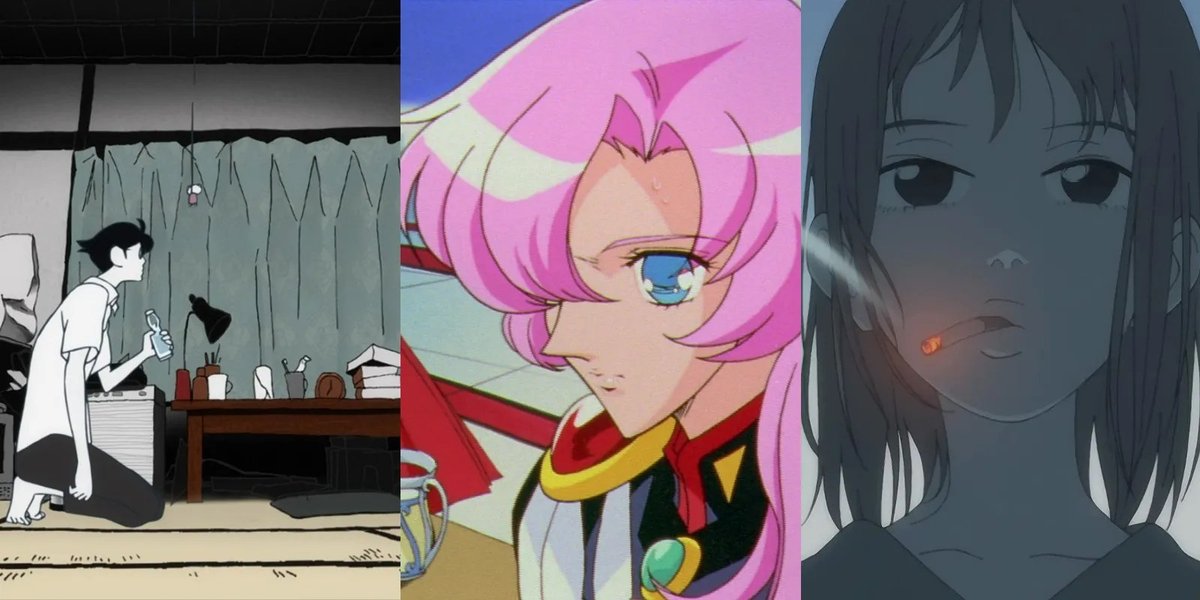
The transition from adolescence to adulthood is a universal journey, but few mediums capture its nuanced anxieties, triumphs, and self-discovery quite like anime. Far from mere cartoons, these intricately crafted narratives use Visual Symbolism and Storytelling of College Milestones in Anime to unveil the profound emotional and intellectual growth of young protagonists. It's a storytelling approach that goes beyond dialogue, inviting you to decipher a rich tapestry of visual cues, unspoken sentiments, and thematic undertones that resonate deeply with the college experience.
At a Glance: Decoding Your Anime College Experience
- Beyond the Surface: Understand how anime uses subtle visuals and indirect dialogue to convey complex themes, especially about college life.
- Symbolic Language: Learn to interpret recurring motifs—from philosophical eggs to real-world landmarks—that signify growth, struggle, and identity formation.
- Unspoken Truths: Discover how seemingly casual conversations or pregnant pauses reveal deeper anxieties and societal pressures faced by college students.
- The Great Divide: Explore how anime portrays the tension between individual aspirations and collective expectations within the university setting.
- Cultural Lens: Equip yourself with strategies to interpret anime through a culturally informed perspective, enhancing your appreciation.
- Empowered Viewing: Transform your viewing habits from passive entertainment to active, insightful engagement with rich social commentary.
Beyond the Blackboard: Anime's Unique Storytelling Canvas
When you immerse yourself in anime depicting college life, you're not just watching characters move through their academic journey. You're entering a distinct narrative universe that prioritizes indirect communication and symbolic depth over overt exposition. Unlike much Western animation, anime frequently employs a sophisticated language of visual metaphors, oblique dialogue, and deeply embedded thematic undertones. This unique approach fosters a more intellectual and emotional engagement, turning what might seem like a simple campus drama into a philosophical exploration of youth, purpose, and societal place.
This isn't about spoon-feeding you answers; it's about inviting you to become an active participant in the storytelling. You're meant to piece together motivations, infer emotional states, and discern social commentaries from elements that often appear surreal or understated. It’s a method that profoundly enriches the depiction of major life transitions, like those experienced during college.
The Silent Language: Visual Symbolism of College Milestones
Anime's visual symbolism is a powerful, often subconscious, conduit for meaning. It transforms seemingly ordinary scenes into profound statements, especially when depicting the transformative period of college. These symbols don't just decorate the screen; they communicate layered cultural, historical, or conceptual references that deepen your understanding of a character's journey.
The Fresh Start: Hatching from the Egg (and other beginnings)
Imagine a character literally or metaphorically "hatching from an egg" at the start of their college career. This potent imagery immediately invokes philosophical ideas around existentialism and individual purpose. It signifies a rebirth, a breaking free from a protective shell (often home or high school) to confront the world as a new, developing self. In college anime, this could manifest as a character moving into a new dorm, joining a new club, or making a radical change in appearance—all visual metaphors for shedding an old skin and embracing a new identity. The blank slate of a new semester often feels like this, a chance to define who you are, independent of past constraints.
The Weight of Expectations: Religious Symbols and Moral Dichotomies
You might encounter religious symbols like crosses or halos subtly woven into a college setting, perhaps in character design, architectural elements, or background art. These aren't always explicit statements of faith. Instead, they often reinforce moral dichotomies in shows exploring corruption within academic systems or the ethical dilemmas students face. A character struggling with an unfair grading system or a morally ambiguous club activity might be framed with such symbolism, highlighting their internal conflict or the stark choices they confront. It's a visual shorthand for the battle between 'right' and 'wrong' that often defines a young adult's journey towards establishing their own moral compass.
Anchoring Identity: Real-World Icons and Spiritual Journeys
Anime frequently uses real-world icons to ground its stories. Think of a college campus nestled near a famous landmark, even if fictionalized. Just as Mount Fuji or Tokyo Tower can anchor stories in cultural touchpoints and signal spiritual concepts like impermanence or enduring spirit, a recurring shot of a university clock tower or a specific campus bridge can do the same. These visuals don't just place the story geographically; they imbue the setting with significance. They can symbolize the passage of time, the weight of tradition, or a spiritual journey toward self-discovery against a backdrop of established permanence. For many, college is their first true immersion in a new city or environment, and these architectural touchstones become symbols of their new reality and burgeoning independence.
Unveiling Purpose: The Shadowy Dios and the Quest for Self
Consider the shadowy Dios in Revolutionary Girl Utena, representing a desire for purpose and protection. In the context of college, this might manifest as a student idealizing a mentor, a particular major, or even a romanticized vision of their future career. The illusory nature of Dios ties into Sisyphean futility, self-actualization, and overcoming romanticized masculinity. For college students, this translates to the often-painful realization that their carefully constructed dreams might be an illusion, requiring them to constantly redefine their purpose, confront their own romanticized ideals, and ultimately, embark on the challenging path of genuine self-actualization. They must discern between genuine passion and external pressures, leading to profound personal growth. You can dive even deeper into the full college anime experience to see how these themes play out from enrollment to graduation.
By learning to catalog these symbols, you can discern deeper sociocultural commentary within seemingly entertaining visuals, transforming anime into a sophisticated symbolic code language that reveals the complexities of a youth's journey.
Whispers and Subtexts: Decoding Indirect Dialogue in College Life
Anime storytelling rarely hits you over the head with its themes. Instead, it introduces substantive ideas and social commentaries through oblique dialogue and indirect conversations, making you lean in and listen closely. This is particularly true in college settings, where characters often grapple with complex internal and external pressures.
The Art of Small Talk: Unmasking Deeper Worries
Think about how characters in a college anime might engage in small talk about the weather, what they had for lunch, or a trivial assignment. These seemingly innocuous exchanges often hint at weightier topics like isolation, ethical dilemmas they’re facing in a study group, or their anxieties about freedom and responsibility. A casual remark about a looming exam could subtly highlight a student's overwhelming stress or a deeper fear of failure. It's a reflection of how people in real life often skirt around difficult subjects, using everyday pleasantries as a shield.
Unspoken Pressures: Pauses, Exaggeration, and Conformity
Pay attention to exaggerated responses, pregnant pauses, or sudden changes in tone during conversations. These aren't just quirks; they signal discomfort addressing issues directly, often reflecting societal pressures to conform within a college environment. A character might laugh too loudly at a questionable joke from a popular classmate, or fall silent when asked about their unpopular opinions, revealing a profound fear of judgment or ostracization. These moments are critical for interpreting characters' true motivations and perspectives, especially as they navigate the social hierarchies and expectations inherent in university life. For example, a student might struggle with academic honesty, their internal conflict communicated not through a monologue, but through a hesitant pause or averted gaze when discussing a group project. Discovering the best college anime series often means appreciating these subtle narrative techniques.
From Clubs to Capitalism: Metaphorical Battles on Campus
Anime frequently uses conceptual metaphors to tackle big ideas. For instance, a fiercely competitive school club election or an ideological debate within a campus organization might represent cutthroat capitalism, political extremism, or broader societal power struggles. The rivalry between two dorms could symbolize class divisions, or the struggle to launch a startup project could mirror the challenges of entering a competitive job market. These campus-level conflicts are not just about the characters' immediate goals; they're microcosms of real-world issues, reflecting the larger systems and tensions that college graduates will eventually face.
Interpreting these exchanges requires reading cultural cues and listening for double meanings. It demands that you piece together characters' true motivations and perspectives, recognizing that in anime, what's not said can often be more profound than what is.
The Crossroads of Self: Collectivism vs. Individualism in the University
The tension between collectivism and individualism is a pervasive theme in anime, offering complex perspectives on societal structures. This dynamic becomes particularly poignant during the college years, a time when young adults are expected to forge their individual paths while still often feeling the pull of familial, social, or national expectations.
Breaking Chains: Challenging Authority and Finding Your Path
In anime, you might see this tension played out through characters who, much like the protagonists in Attack on Titan, find themselves within authoritarian systems. While Attack on Titan deals with literal walls and oppressive governments, a college anime might use a rigid academic department, a dominating student council, or an overly traditional campus culture as a metaphor. Protagonists grapple with whether to comply with these systems or resist them to forge their own intellectual and personal freedom. This reflects the real-world dilemma of students who might question traditional career paths, challenge outdated teaching methods, or speak out against social injustices on campus. Their struggle to break free from perceived "walls" or conformist thinking is a core part of the college experience.
The Dreamer's Dilemma: Passion vs. Obligation
Many college students face the weighty choice between pursuing their true passions and fulfilling familial or societal obligations. Anime like Love of the Craft From another World explore these challenges explicitly, depicting characters who struggle to reject pre-ordained paths to chase their dreams. In a college context, this could be a student torn between their family's expectation to become a doctor and their own burning desire to study art, or a character choosing an unconventional major over a "safe" one. The narrative often tracks the emotional toll of such decisions, highlighting the sacrifices and courage required to prioritize individual fulfillment over external pressures.
"Slice of Life" and the Global Youth Experience
"Slice of life" anime, often set in high school or college, masterfully captures these coming-of-age subtexts. These shows resonate with youth grappling with similar dilemmas globally: resisting corporate culture, challenging societal body image ideals, or simply trying to find their unique voice amidst a sea of expectations. The everyday struggles of fitting in, making friends, succeeding academically, and discovering one's identity are all filtered through this lens of individualism versus collectivism. Evaluating the framing perspectives helps you discern implicit guidance on navigating social issues. Tracking behaviors that garner sympathy versus condemnation reveals predominant cultural mindsets on rebel versus conformist paths, offering insight into what it truly means to "grow up" in a complex world. To grasp the full scope of these struggles, it helps to understand common college anime tropes that underscore these themes.
Becoming an Anime Anthropologist: Strategies for Deeper Understanding
To truly unlock the deeper meaning in anime, particularly when it portrays the complexities of college milestones, you need to adopt a measured, analytical approach. It’s about more than just watching; it’s about decoding.
Mind the Motifs: Uniforms, Classrooms, and Urban Echoes
Start by paying close attention to recurring visual motifs. In college anime, these might include:
- Uniforms: While less common than in high school, specific departmental attire or club uniforms can signify affiliation, conformity, or a character’s attempts to break away.
- Classroom Settings: The arrangement of desks, the presence (or absence) of natural light, or the state of the blackboard can subtly reflect the academic atmosphere or a character’s internal state.
- Urban Cityscapes: The sprawling, often impersonal nature of a city surrounding a college campus can symbolize the vastness of the future, the feeling of being a small fish in a big pond, or the anonymity that allows for self-reinvention.
Also, listen for audio cues. The ubiquitous alarm clock beeps, the distant school bells, or even the distinct sounds of a campus café all serve as signals of youth, adolescence, and the structured yet often chaotic nature of higher education. These elements are not incidental; they are carefully placed narrative devices. You can find more insights into this by understanding the broader college anime genre.
Bridging Cultural Divides: Eastern Philosophy for Western Eyes
It's crucial to recognize that interpretations are filtered through diverse cultural lenses. While anime has universal appeal, an unmoored analysis by Western fans risks missing intended messages. To truly understand the deeper narratives, especially those around life transitions like college, you benefit immensely from grasping Eastern philosophical concepts. Concepts like:
- Karma: Understanding cause and effect, and how past actions might influence a character's present struggles or future path.
- Reincarnation: While not always literal, this can symbolize cycles of growth, rebirth, or recurring challenges a character faces.
- Filial Piety: The deep respect and obligation towards elders and family, which often plays a significant role in a character’s decision-making during college regarding career choices, relationships, and independence.
A balanced analytical framework requires foundational media and cultural literacy. Without this context, you might mistake a cultural nuance for a simple plot point, missing an entire layer of meaning.
Beyond the Screen: Curating Contextual Knowledge
To further enrich your analysis, utilize reference guides for sociocultural context relevant to specific genres. For college anime, this might mean understanding the nuances of:
- Slice of Life: How these shows often emphasize personal growth, relationships, and everyday challenges with understated drama.
- Magical Girl: While seemingly fantastical, these series can explore themes of responsibility, female empowerment, and the burden of expectation, which can mirror a student's newfound responsibilities.
- Mecha: Beyond giant robots, mecha anime frequently delves into existentialism, the costs of war, and humanity's place in the universe, which can parallel a college student's grappling with grander philosophical questions.
By understanding the historical, social, and narrative conventions of these genres, you gain additional tools for interpreting the specific messages within college-themed anime.
The Art of Balanced Interpretation
Approach your analysis with open yet grounded interpretations. Ensure your conclusions rely on a structured evaluation of interwoven narrative elements—visuals, dialogue, character actions, and thematic consistency—rather than instinctive, subjective reactions alone. This measured approach amplifies anime's capacity for social commentary and facilitates rich discussions on profound societal struggles. The ultimate magic of anime, in this context, often lies in its capacity for open-ended debate rather than delivering definitive answers. It encourages you to think, to question, and to relate the onscreen journey to your own experiences and the broader human condition.
Navigating the Nuances: Common Pitfalls and Smarter Viewing
When delving into the rich world of anime symbolism, it's easy to fall into certain traps. One common misconception is viewing anime as merely children's entertainment, thus dismissing its profound depth. This mindset leads to overlooking the intricate layers of storytelling designed for mature audiences. Another pitfall is engaging in "unmoored analyses" – interpreting symbols without cultural context, leading to conclusions that might be far from the creator's intended message. For example, assuming a character's quietude signifies shyness might miss a deeper cultural implication of respect or internal struggle.
Smarter viewing involves actively engaging with the material, researching cultural references, and cross-referencing interpretations. Don't be afraid to pause and consider why a certain visual was used or what an indirect conversation truly implies. By doing so, you move beyond passive consumption to become an active, informed participant in the narrative, allowing the anime to truly speak to you on multiple levels.
Your Journey, Unveiled: The Lasting Magic of College Anime
The journey through college, as depicted in anime, is a microcosm of life itself—a period brimming with choices, challenges, and profound growth. By understanding the visual symbolism and indirect storytelling techniques, you gain a new lens through which to appreciate these narratives, moving beyond superficial entertainment to a deeper, more meaningful engagement. You'll find yourself not just observing characters on screen, but reflecting on your own transitions, your own search for purpose, and your own battles between expectation and ambition.
Anime's true magic lies in its ability to offer powerful reflections on the human experience, particularly the transformative years of youth. So, the next time you watch a college-themed anime, remember to look closer, listen deeper, and engage with the layers of meaning just waiting to be unveiled. You might find that the stories on screen offer profound insights into your own journey, helping you understand the intricate dance of independence, belonging, and self-discovery that defines this pivotal chapter of life.